Leak Detection in Redlands
Leak Detection in Redlands. $125 to $400 — after a free test that sometimes shows the leak is not yours to pay for at all.
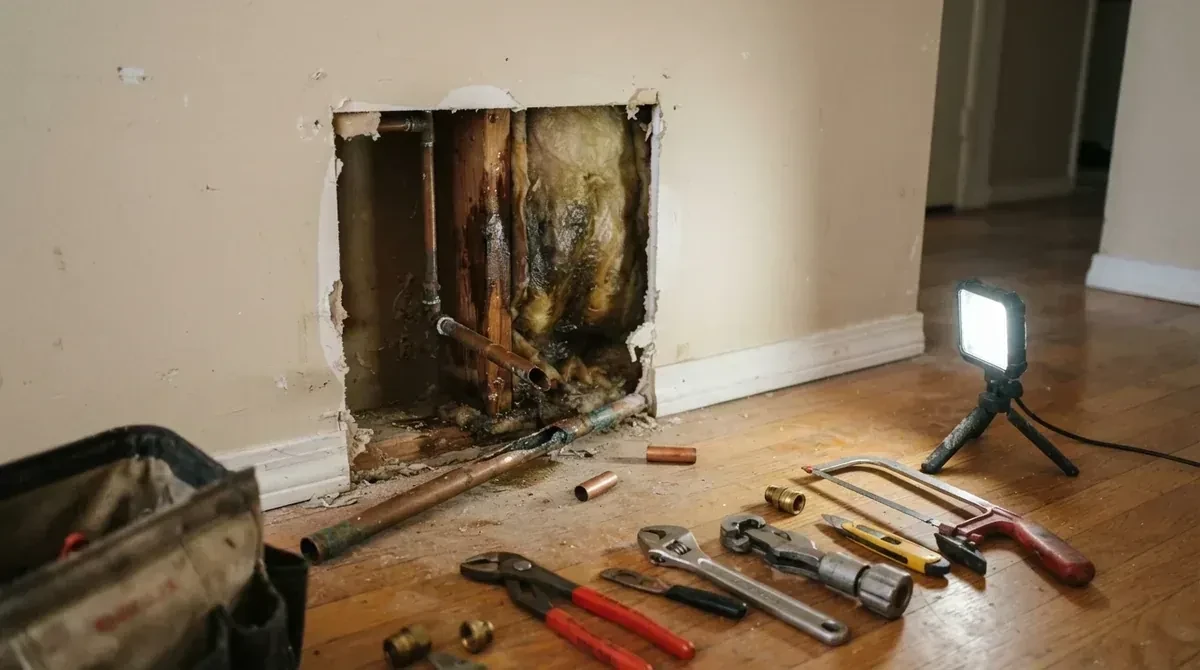
At a glance
- Estimated range $125–$400
- How soon Next working day, almost always
- After hours, estimated $170-350/hr
What needs somebody tonight in Redlands
Ring now
- Wet ground and a jump in the billWater appearing in the yard or along the side of the house.
- Water coming up through the floorWet tile, lifting flooring, or a warm damp patch over the slab.
- The meter moving with everything offEvery tap and appliance shut and the meter still turns: water is going somewhere.
It can wait for a booking
- A meter that moves only while a toilet refills
- Low pressure with no wet spots anywhere
- A musty smell with no water you can see
What Leak Detection in Redlands costs
Older supply puts the cost in front of the emergency rather than after it. A pressure complaint attended in daylight is a fraction of the same fault attended as a leak at nine on a Sunday.
| Job | Typical range | How soon |
|---|---|---|
| Leak Detection | $125 - $400 | next working day, almost always |
| Drain Unblocking | $100 - $300 | next working day, usually |
| Emergency Plumber | $110 - $500 | same day, or scheduled if that saves you money |
| Burst Pipe Repair | $150 - $550 | same day, always |
These are the ranges the trade publishes and homeowners report. Yours is a written quote once the job has been seen.
Leak Detection in Redlands: what actually fails
On galvanized supply the leak and the pressure complaint are the same fault at two stages. A property with poor pressure AND a creeping meter is not two problems; it is corrosion far enough along to be both restricted and perforated.
An older, larger city west of Yucaipa with a long history in citrus, and a historic center with genuinely old housing in quantity — the oldest building stock anywhere in this service area.
- Whether the supply is galvanized, because pressure is the warning
- Whether an isolating valve will actually close before relying on it
- Clay or not below ground, which decides the prognosis
- Whether a heater has been relocated, and what that did to the vent
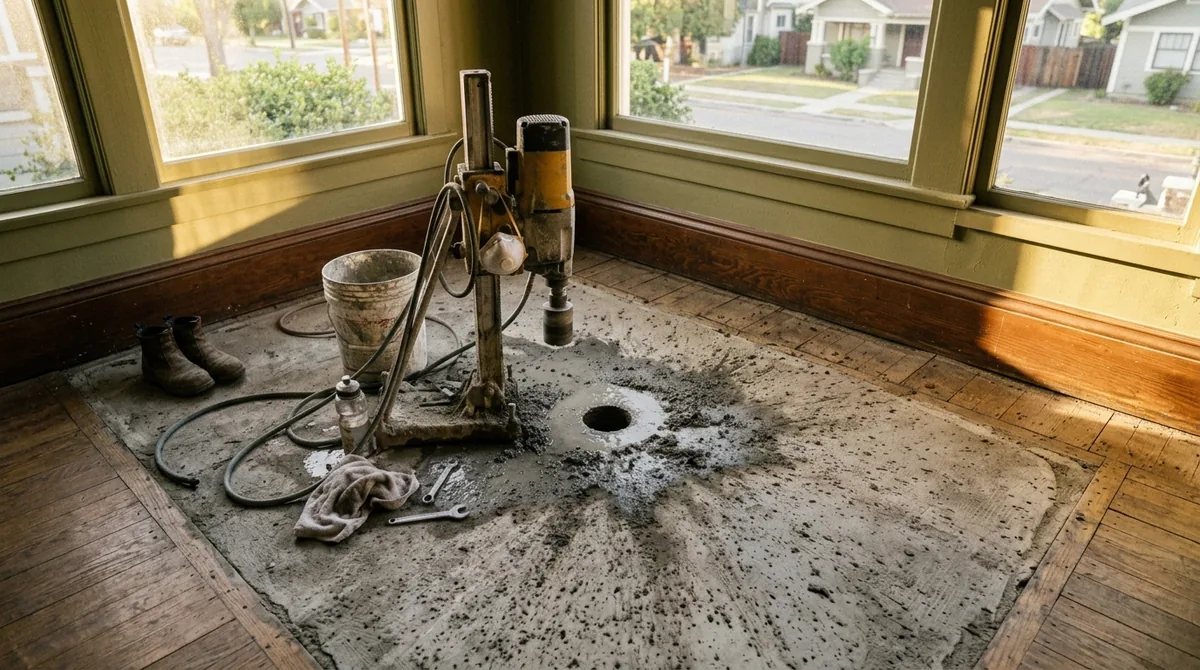
RedlandsA small core hole cut in a slab with damp concrete dust around it
Leak Detection in Redlands, as it runs
The oldest stock here. Pressure is the warning.
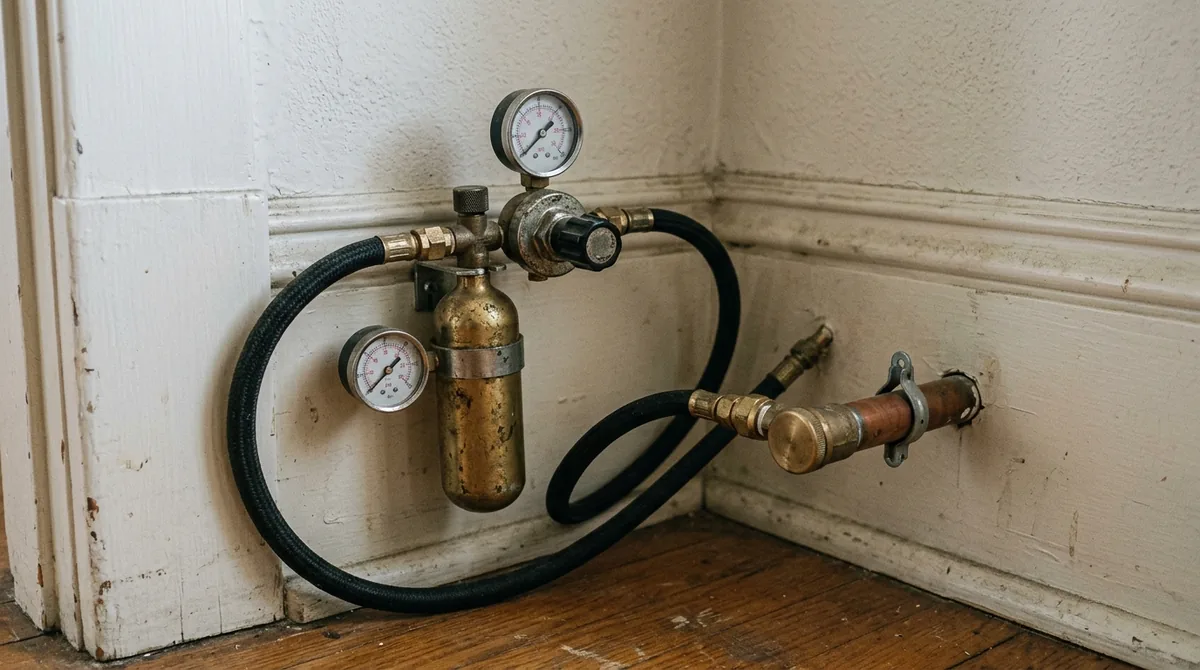
Leak detection, RedlandsA leak detection test kit, a small test cylinder and regulator hosed to a capped water pipe
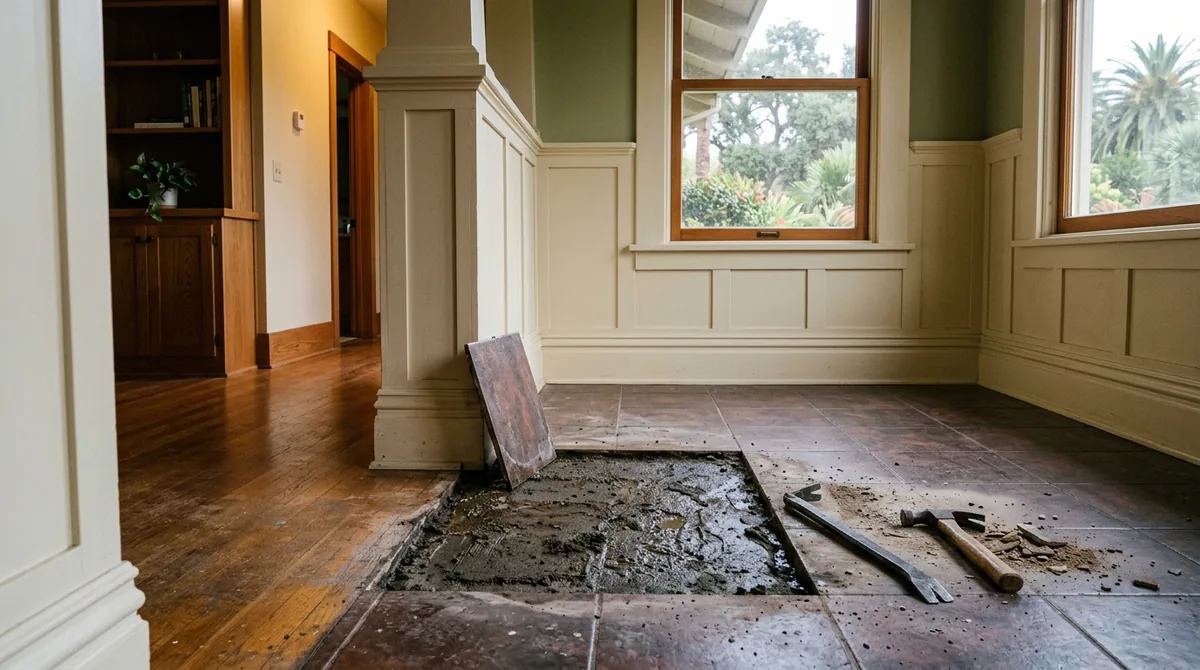
On site in RedlandsA floor tile lifted with the slab beneath it damp
Need Leak Detection in Redlands?
The oldest stock here. Pressure is the warning.
Leak Detection in Redlands: straight answers
How can I check for a leak myself?
Turn off every fixture and appliance, then watch the water meter for twenty minutes. Still moving means water is going somewhere it should not. The test costs nothing and it sometimes ends the question entirely.
Does a leak need dealing with tonight?
Almost never. A leak found from a meter reading or a stain is one you have time to locate properly. It becomes tonight's problem when something is visibly failing — a sagging ceiling, a wet wall near a socket, a lifting floor.
What plumbing work can I legally do myself in California?
On a home you own and occupy, a good deal — California allows a homeowner to work on their own primary residence, and the ordinary maintenance end of this trade is genuinely within reach: clearing a trap, a flange plunger or a closet auger on a blocked pan, a hand snake past a trap, a toilet flapper or fill valve, a flexible supply line, a tap washer or cartridge. What is different is not difficulty but PERMISSION and RISK. Permitted work needs a permit whatever your skill: replacing a water heater, moving or re-routing a line, anything structural. And three things are dangerous rather than hard — gas fittings, a water heater's temperature-and-pressure relief valve, and anything where water has reached electrics. Selling a house later also raises the question of whether work was permitted, which is worth thinking about before rather than after.
How much fall should a 2 inch drain pipe have?
A quarter of an inch per foot, which is a 1-in-48 slope, and that is the figure for 2-inch and 3-inch horizontal drainage. The common mistake is assuming more is better: too much fall lets the water run away and leaves the solids behind, which is why a steeply pitched line blocks as reliably as a flat one. Four-inch pipe is allowed an eighth of an inch per foot. If a drain in your house is slow and nothing is blocked, a run that was extended during a remodel without keeping its fall is a very common cause, and no amount of clearing improves it.
Talk to us about Leak Detection in Redlands
The rate before we travel, and a fixed figure in writing before any work starts.